3 August 2026 Samoa and New Zealand strengthen public enterprise governance through twinning visit
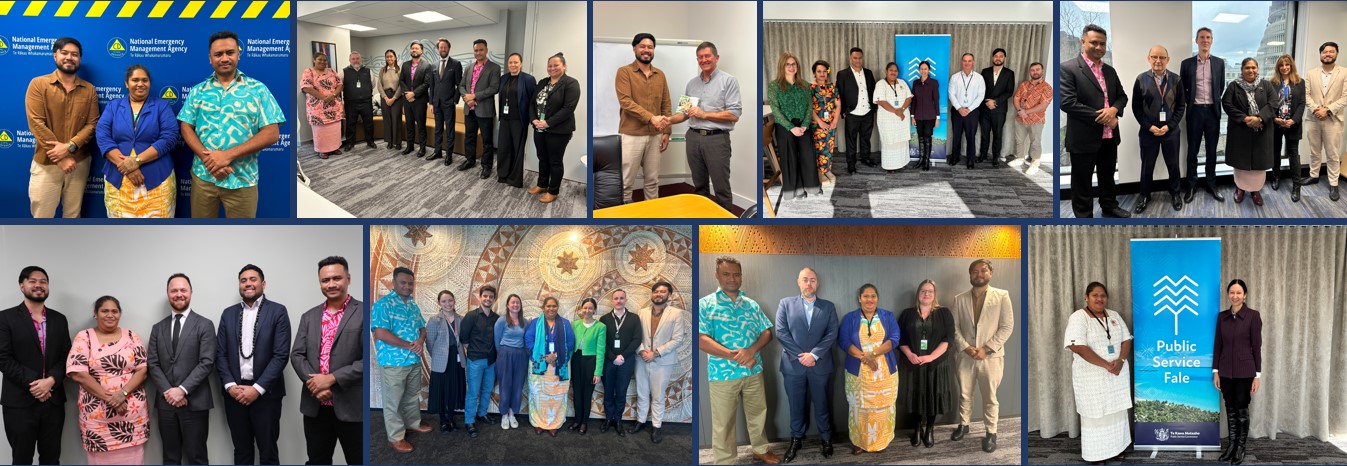 The Public Service Fale recently welcomed a delegation from Samoa's Ministry for Public Enterprises to New Zealand from 27 to 31 July 2026 for a week-long twinning visit focused on public enterprise governance, oversight and performance.
The visit formed part of the Public Service Fale's twinning programme, which brings Pacific public service agencies together with New Zealand counterparts to share experience, strengthen relationships, and explore practical approaches to common challenges.
Across five days, the delegation met with New Zealand public sector agencies and leaders to learn about public sector governance, board appointments, organisational performance, accountability, stewardship, and monitoring arrangements. Discussions provided insights into how public organisations work together to strengthen oversight while supporting long-term economic and social outcomes.
Learning from experience
The programme began at The Treasury, where officials explored New Zealand's approach to public enterprise monitoring, board appointments, accountability, and performance. This provided a strong foundation for wider discussions throughout the week.
The delegation also met with the Public Service Commission, the Office of the Auditor-General, the Ministry of Foreign Affairs and Trade, Te Puni Kōkiri, the Ministry for Pacific Peoples, the Department of the Prime Minister and Cabinet, Health New Zealand, the National Emergency Management Agency, and a board chair appointed by a government agency. Together, these discussions explored public sector stewardship and governance, leadership, organisational culture, performance systems, capability building, emergency management, and practical approaches to supporting effective boards and public entities.
A recurring theme throughout the visit was the importance of clear governance arrangements, strong relationships between oversight agencies and public entities, and aligning organisational performance with government priorities and the needs of communities.
Building capability through partnership
The visit created space for the delegation to exchange ideas, ask practical questions, and consider approaches that could be adapted to Samoa's context.
New Zealand agencies also had the opportunity to learn from Samoa's experience and reflect on shared governance challenges across the Pacific.
Samoa Ministry for Public Enterprises Chief Executive Officer Elita Tooala described the visit as:
"An invaluable opportunity for MPE to strengthen its capability by learning from New Zealand's experience and identifying practical approaches that can be adapted to Samoa's context."
Reflecting on the visit, she noted that one of the strongest messages was the importance of clarity around the purpose of public ownership.
"Effective monitoring starts with the Government's clear purpose for owning public enterprises. Once that purpose is clear, performance can be measured against the outcomes Government expects to achieve."
Elita also expressed appreciation for the welcome and support provided throughout the week.
"On behalf of the Ministry for Public Enterprises, I would like to express our sincere appreciation to the New Zealand Government, our hosts, and everyone involved in organising this programme. We are grateful for the generosity, openness, and willingness to share knowledge and experience so freely."
Strengthening Pacific public services
The visit forms part of the Tautai – Samoa Governance for Economic Growth Programme, which supports stronger governance and public sector capability in Samoa.
Beyond the technical learning, the visit strengthened relationships between Samoa and New Zealand public sector organisations and created opportunities for ongoing dialogue, shared learning and collaboration.
The Public Service Fale acknowledges the generous support of the New Zealand agencies and leaders who met with the delegation, shared their experience and expertise, and helped make the visit a valuable learning opportunity.
By supporting peer learning, knowledge sharing, and trusted connections across the region, the twinning programme helps build stronger public institutions and long-term relationships that support improved outcomes for Pacific communities.
-
Managing Conflicts of Interest in Pacific Public Services – an opportunity to share, learn, connect21 July 2026
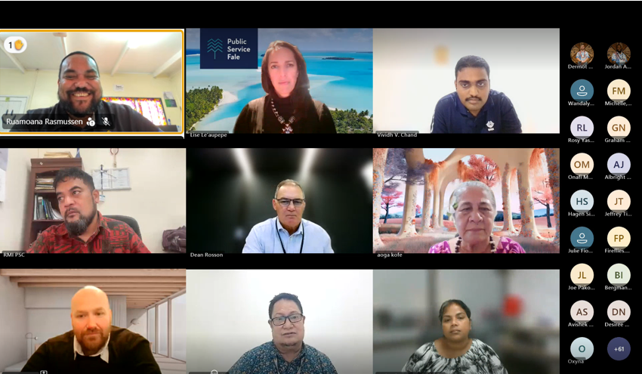
Public servants from across the Pacific attended the Fale’s latest online Share Learn Connect session, Managing Conflicts of Interest in Pacific Public Services.
Kireata Meauke, Director, Kiribati Public Service Office (PSO) shared how the Kiribati PSO manages conflicts of interest including describing the frameworks that underpin their recruitment processes, keeping them transparent, honest and fair. Highlighting the Kiribati recruitment process flowchart, detailing the steps they follow and what happens if these rules are broken.
Kireata explained how conflicts of interest in recruitment are managed by building checks into each stage of the process, rather than relying solely on people to declare conflicts. This is important in all public service contexts, including the Pacific where family, village and personal connections are common.
Key checks include:
- Public Service Office approval before recruitment proceeds
- Independent observers to support fairness and transparency
- Formal conflict declarations and panel adjustments where needed
- Anonymous testing, documented decisions and investigations if rules are broken.
These checks show that a clear process, good records, oversight and consequences help ensure integrity is reflected in recruitment processes and public trust and confidence is retained.
Dean Rosson, Manager, Public Service Fale, discussed a case study from a recent investigation he was involved with where conflicts of interest during the procurement process involved an agency granting contracts to a provider whose managing director was the partner of the agency Chief Executive. His presentation included lessons learned from the investigation and a framework to manage conflicts of interest.
Dean highlighted that conflicts of interest are common and do not mean anyone has done anything wrong - they just need to be managed. Declaring or naming a conflict of interest is not enough. A conflict is managed by understanding the risk and putting credible controls around it. You need to be proactive.
A short question and answer session after each presentation followed by smaller group discussions provided opportunities for questions, discussions and sharing of views and experiences. Some initial reflections from the evaluation included:
“The different but somewhat similar cases and situations with other neighbouring countries in the Pacific, a comment that was made that sat with me is that - one person may wear many hats; in a small community”
“Involvement of PICs for their ways of dealing with COI (conflicts of interest) and good international exposure”
If you missed the session, the recording and the two presentations are available on FaleOnline: Course: Share Learn Connect | Managing Conflicts of Interest
Kam rabwa to Kireata, Kiribati PSO, Dean Rosson, and those that attended and contributed to this rich discussion on Conflicts of Interest.
Coming up! Our next Share Learn Connect session focusses on Confidentiality. We look forward to exploring further how effective public service practice and Pacific values intersect. If you have other topics to suggest or would like to share your experiences in a future session, please contact the Fale.
We look forward to connecting again for future sessions.
-
The value of engagement - Fale visit to Palau14 July 2026
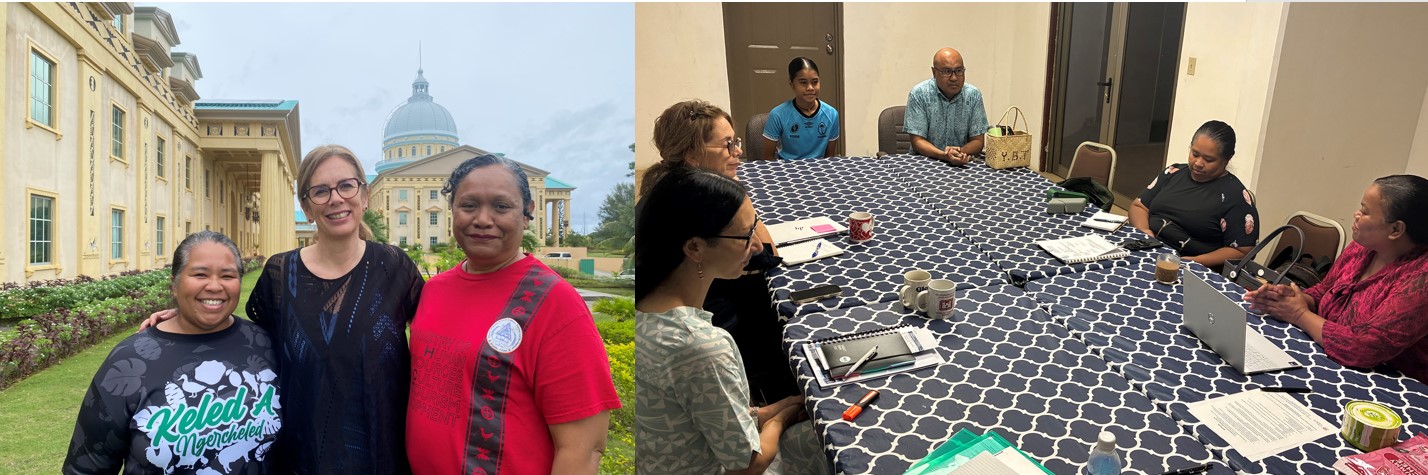 The Public Service Fale recently visited Palau to further work on two key projects advancing Palau’s public sector strengthening programme.
The first is the development of orientation modules for new public servants. Shifting the modules from paper based to online ensures a more consistent and engaging onboarding process and reduces the need for face-to-face meetings. The modules will reduce pressure on HR staff while giving employees an accessible, ongoing reference for their rights, responsibilities, and roles within the public service.
Fale project lead Elaine Nicholas noted the visit provided an opportunity to better understand local context, test assumptions, explore ideas, and co-design the modules with those who know Palau’s public service best. This included Lahaina Ngirkelau and Deserei Imeong from the Bureau of Human Resources, as well as Director Terralyn Nabeyama, whose experience across the public service provided valuable insights. Their collective expertise helped shape the modules’ structure and content. Meeting in person made it easier to finalise the content and strengthened relationships, creating a strong foundation for the project’s final development phase.
The visit to Palau also provided an opportunity to advance planning for Fono 2026: Pacific Public Service Leaders’ Conference, which will be hosted by the Government of Palau from 9–13 November 2026.
Deputy Commissioner Tania Ott and Senior Advisor Teanuanua Nicole were able to work closely with Fono Chair, Terralyn Nabeyama on finalising key conference arrangements, including the Fono programme ensuring it reflects the priorities and aspirations of Pacific Public Service Leaders. A strong theme emerging from discussions was the importance of creating more space for Commissioners to connect, learn from one another, and explore shared challenges in practical and meaningful ways.
The Palau visit reflects the Fale’s commitment to partnership-led development. Through listening, learning, and ongoing collaboration, our work is shaped by local knowledge and priorities, as we continue to offer support in the Pacific.
-
A modern approach to Public Service induction in the Cook Islands18 June 2026
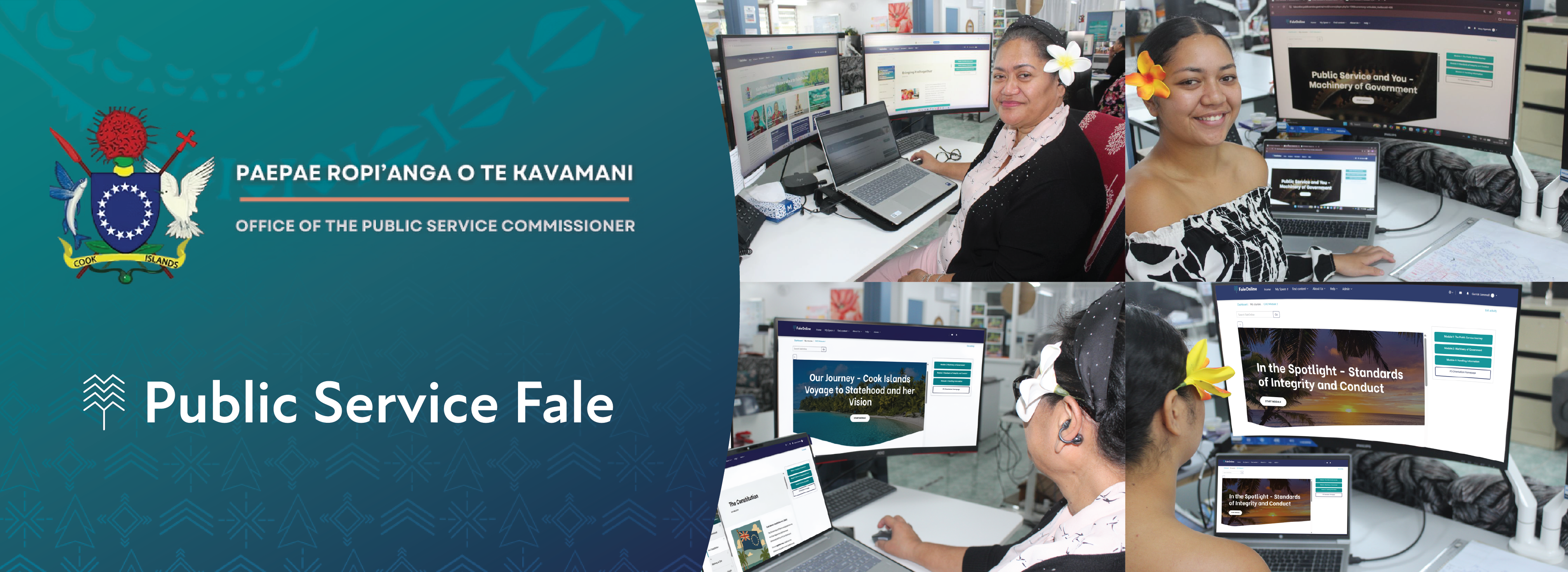
A modern approach to Public Service induction in the Cook Islands
The Office of the Public Service Commissioner (OPSC) believes starting a role in the Cook Islands public service should feel connected, consistent and supported, no matter where you are or when you start.
The Cook Islands Public Sector Orientation (induction) introduces new employees to how the public service works: its values, expectations and how it serves its people. Traditionally, this has been delivered through in-person sessions in Rarotonga. While valuable, this approach has become harder to sustain as the workforce grows and spreads across more locations. Fewer new staff can attend in person, so some are inducted later than intended or receive inconsistent information.
To address this, OPSC partnered with the Fale to reshape the Orientation into a more flexible learning experience that combines online modules with face-to-face sessions through FaleOnline, the Fale’s online learning management system. The goal was simple. Every public servant, whether based in Rarotonga or the Pa Enua, should be able to access the same core information at any time, learn at their own pace, revisit content when needed, and build a strong foundation before attending in-person sessions.
The Fale worked closely with OPSC to convert the existing Orientation into a series of online modules that support, rather than replace, the in-person sessions. The content was developed together to reflect the Cook Islands' context. As one person put it, the modules are "well structured, easy to understand, and helped improve knowledge and preparedness".
Orientation is essential for new employees, and it is just as useful for existing staff who want a refresher, particularly those who completed it several years ago. The online modules make it easier for public servants to revisit key principles, strengthen their understanding and stay aligned with current expectations.
Early feedback shows improved access to induction learning, and the modules are strengthening public servants' understanding of what it means to work in the Cook Islands public service. Users say the modules are easy to use and can be completed at a time that suits them, with one participant noting they were "easy to access from anywhere". This matters most for staff outside Rarotonga. OPSC noted the modules have "helped to make Orientation accessible, particularly to those in remote areas… and allow staff to review the modules at any time". Users also described the content as "clear, engaging and easy to understand" and said it "helped me build knowledge I can use in my role". Another respondent noted the modules ensure "everyone gets consistent information" about working in the public service.
OPSC staff have noticed a shift in how participants engage in face-to-face sessions. Participants now arrive with "a foundational understanding of the Public Sector as a whole when they come to the sessions… we test their recall through a quiz at the beginning". This frees up time to move past introductory content and focus on meaningful discussion, practical insights and engagement with senior leaders. Presenters also have more room to design interactive sessions that bring the public service to life by sharing real experiences, challenges and opportunities across agencies. As one team member said, "it has allowed us to be more creative with how we present at the in-person sessions".
This initiative shows how digital tools can improve the way public service learning is delivered. OPSC has made induction easier to access, more consistent and better suited to a diverse workforce. It reflects a shift towards a more inclusive, flexible and connected public service, and shows how online and in-person learning can work together to support better outcomes for public servants. Through this work, OPSC has also strengthened its own capability to design and deliver digital learning.
-
Strengthening public service workforce planning across the Pacific9 June 2026
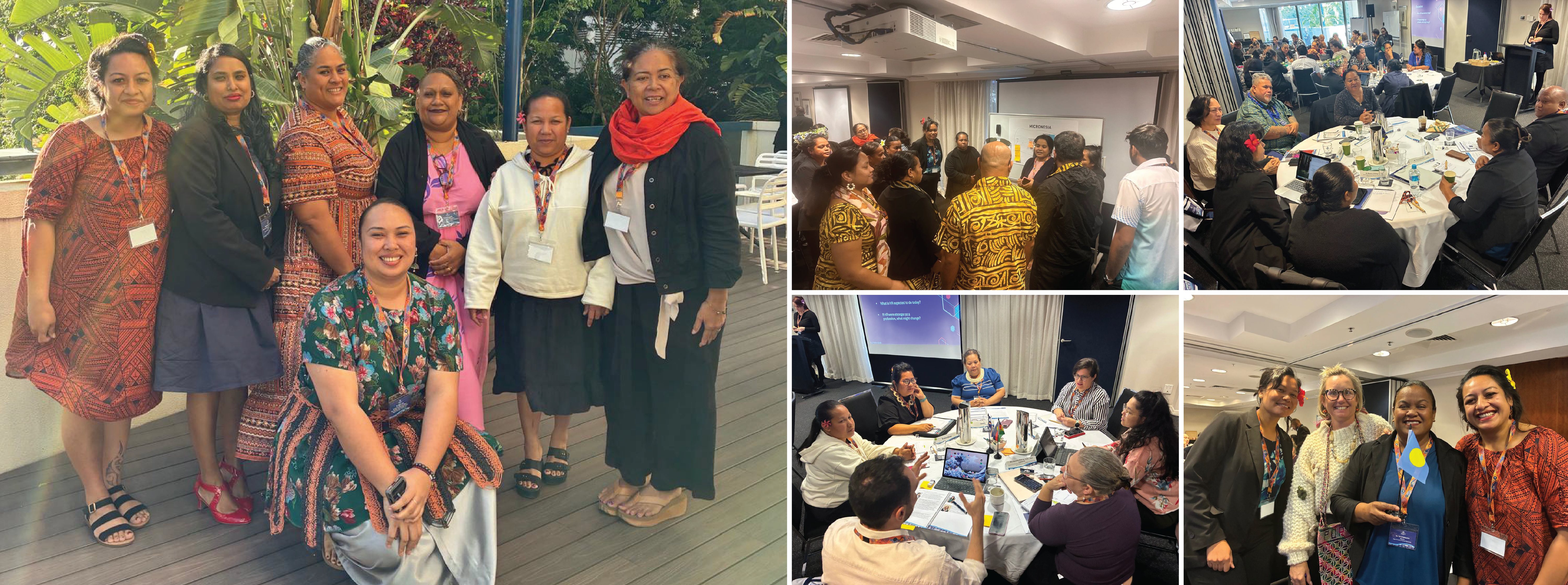
The Public Service Fale recently had the privilege of attending the Pacific Workforce Planning Conference as an observer, following the invitation of the Samoa Public Service Commission and the Australian Public Service Commission.
Hosted in Brisbane from 2 - 4 June 2026, the conference brought together more than 55 HR practitioners from across the Pacific. Over three days, the focus was on practical learning, country-led insights, and strengthening how the Workforce Planning Guideline is applied in real settings.
Samoa Public Service Commission is leading this work, supported by contributions from across the region. Their leadership, alongside the support of the Australian Public Service Commission, created the conditions for informed, country-led conversations to advance workforce planning across the Pacific.
Throughout the conference, countries shared how they are adapting the Guideline to reflect their own context and priorities. The examples shared showed steady progress and growing capability, with a strong sense of openness across countries. Participants exchanged ideas, challenges, and solutions in a way that supported collective progress.
We are grateful to and acknowledge the Samoa Public Service Commission and the Australian Public Service Commission for their leadership in this area. The Fale looks forward to seeing continued progress across the Pacific and to contributing a deeper understanding of how the Guideline may best be applied over time.
-
Public Service Fale supports Pacific Public Sector Mid-Level Leadership Course in Auckland, NZ5 June 2026
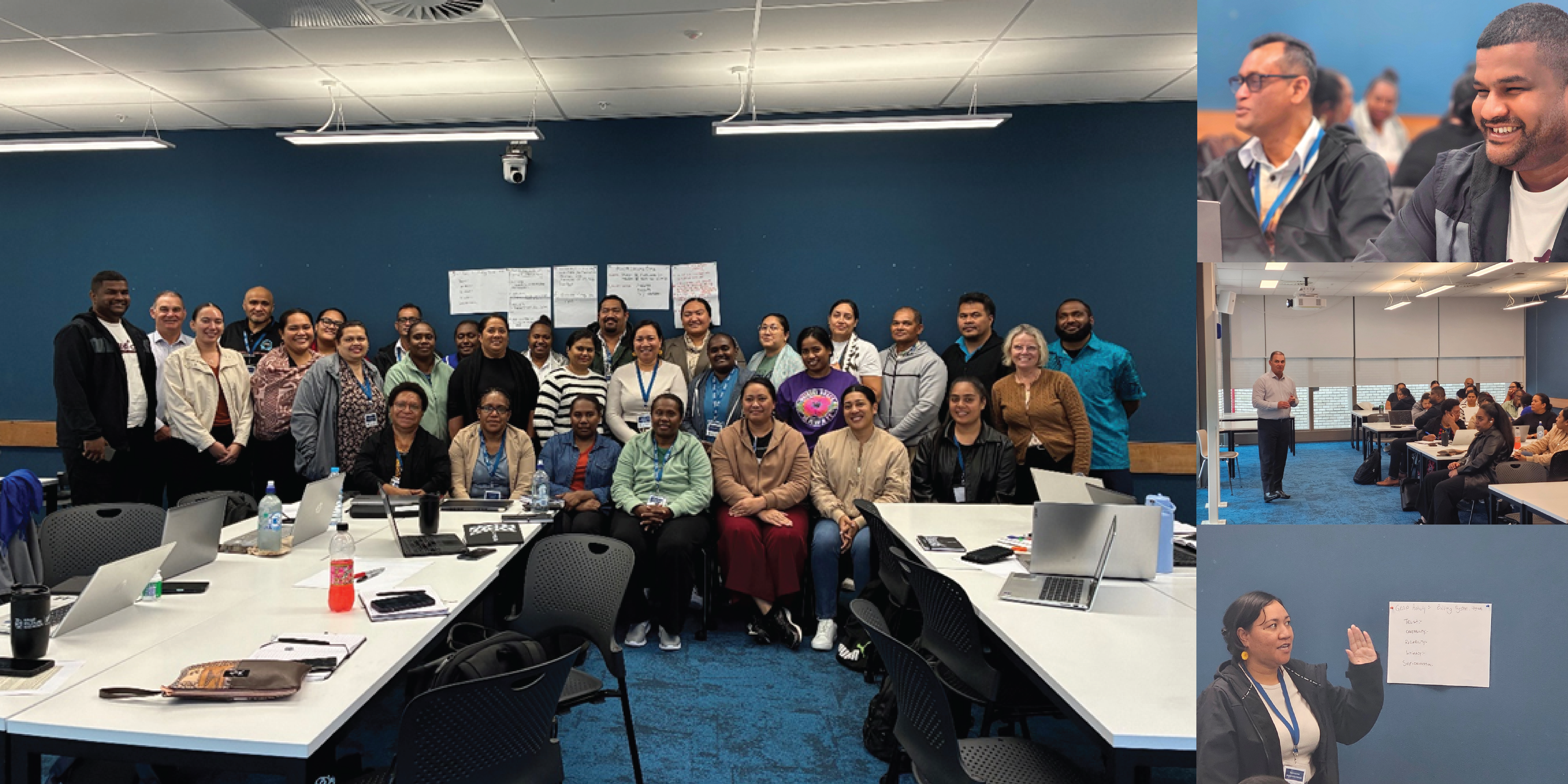
The Public Service Fale was very pleased to support the Public Sector Leadership Mid-Level course delivered by the Public Policy Institute, University of Auckland from 25 May to 12 June 2026.
Funded through the Ministry of Foreign Affairs and Trade Manaaki New Zealand Scholarships, the course brings together Pacific officials in Mid-level public sector leadership roles to increase the knowledge and skills that will lead to improved public sector efficiency and effectiveness in their home countries.
From the Fale, Dean Rosson, Manager, and Jordan Aquila, Advisor, met with 28 senior leaders from twelve Pacific countries as part of the Programme. They shared an overview of Public Service Fale’s work, including how we support Pacific Public Service Commissioners and senior public servants across 16 Pacific Island Countries and Territories through regionally focussed initiatives, shared learning, and practical capability building. The session included an activity where participants worked in groups to discuss a change process they were involved in using the trust equation framework to share how they built trust in the change process
We valued the opportunity to connect with our fellow public servant leaders, who are navigating common issues in the delivery of their governments' public sector priorities and, to contribute to their learning and development during their three-week programme in Auckland.
The Public Service Fale’s core purpose is to support strong, capable, and trusted public services by facilitating regional cooperation, shared learning, and practical capability building. Our long-term outcome is to support the delivery of effective, citizen-centred public services that respond to the needs of citizens in each country and territory.
Thank you to the Ministry of Foreign Affairs and Trade, the Public Policy Institute of University of Auckland and the Programme participants for the opportunity to connect and share learning.
-
Announcement: Share Learn Connect | Managing Conflicts of Interest in the Pacific Public ServiceRegistrations close 24 June 2026
As part of the Fale’s Share Learn Connect series for 2026, we are pleased to announce our second session on Managing Conflicts of Interest in the Pacific Public Service. Share Learn Connect events provide the opportunity for Pacific public service colleagues to deepen understanding, strengthen capability, and connect through shared learning.
This session will be led by the Kiribati Public Service Office and Public Service Fale, who will share practical insights to their approaches on managing conflicts of interest in the public service.
This session is open to all Pacific public servants. It is particularly relevant to those involved in contracting, procurement and recruitment. We appreciate your support in sharing this invitation with your leadership team, wider staff and departments. We particularly welcome attendance from Human Resource and plicy leaders. Registration for the session can be completed via the link below.
Conflicts of interest can arise daily in Pacific public services, for example through family, church, and community connections that are deeply woven into public servants’ lives. This session will reinforce three messages: conflicts are common, transparency is essential, and conflicts must be managed to protect the integrity of decisions and maintain public trust and confidence.
Presenters:
Kireata Meauke, Director, Integrity and Corruption Control, Kiribati Public Service Office
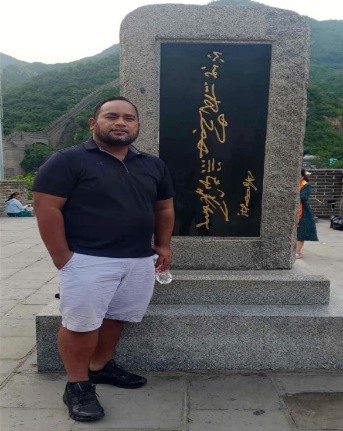
Kireata Meauke leads the Integrity and Corruption Control Division. He manages its day-to-day work and helps strengthen integrity and ethical conduct across the public service, in line with anti-corruption law and policy. He leads work to bring United Nations Convention Against Corruption principles into national law and policy. He previously worked as a Senior Labour Policy Officer at the Ministry of Employment and Human Resources, where he helped bring international labour convention principles into national policy. He also represents the Kiribati Public Service Office at regional and international anti-corruption forums. In this session, Kireata will talk about how conflicts of interest are managed in the Kiribati Public Service recruitment process.
Dean Rosson, Manager, Public Service Fale
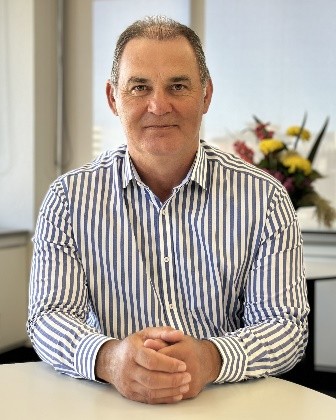
Before joining the Fale earlier this year Dean worked as an Integrity Manager at the Public Service Commission. His work involved supporting public service agencies with integrity advice, responding to integrity concerns including protected disclosures and integrity investigations of agencies when required. Dean will discuss a recent investigation involving conflicts of interest with family members during procurement and will highlight key challenges and lessons learned.
Date: 25 June 2026
Time: 1pm (Kiribati and NZ time)
Venue: Online via Teams
Note: Registrations will close at end of business 24 June 2026.This session supports our shared goal of strengthening ethical leadership and promoting consistent standards within public services across the region.